White Sands LembehDIVE RESORT · WITH ECO DIVERS Book now
Follow us

Dive resort · Batukota, Lembeh Island

Dive Lembeh from your own doorstep.

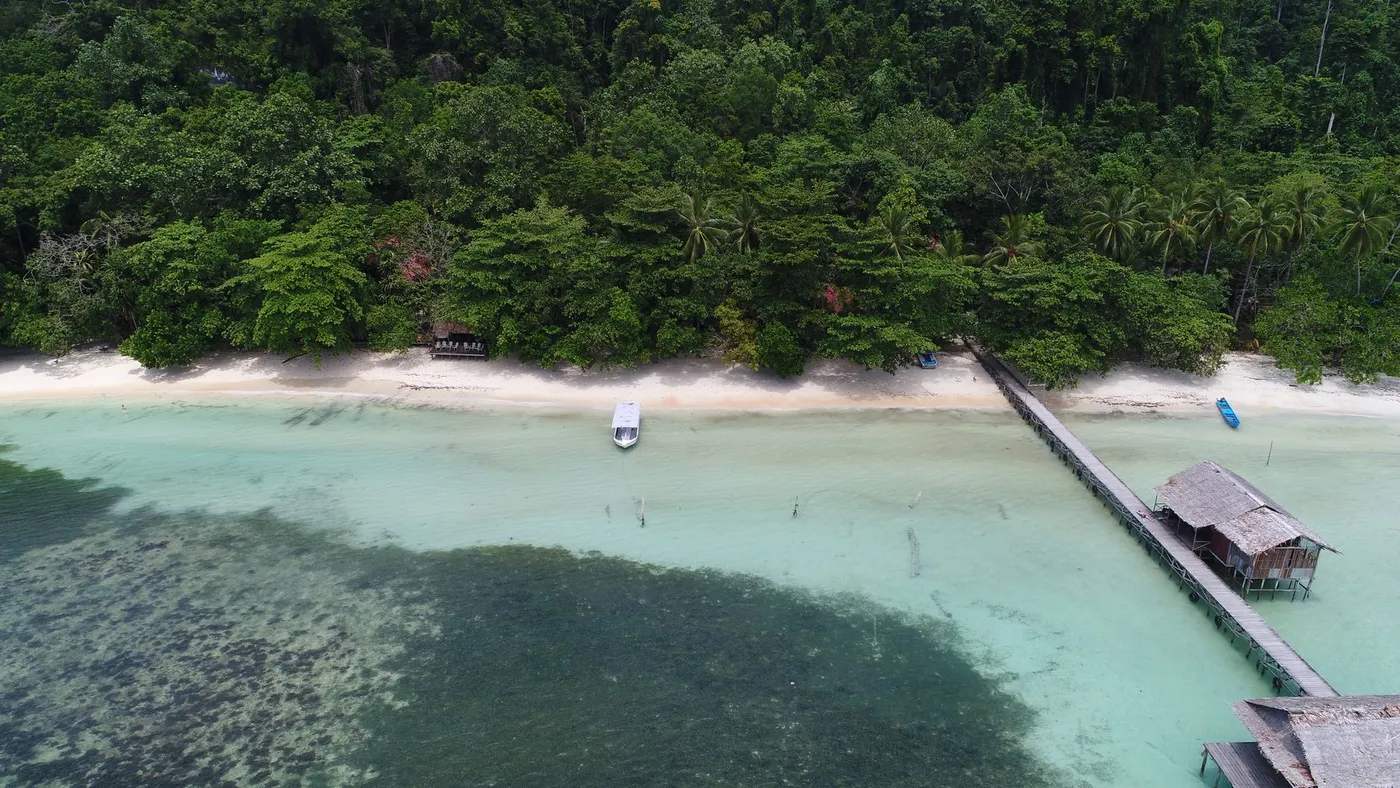
White Sands Lembeh is a dive resort on Lembeh Island: twelve oceanfront cottages, a pool, a kitchen that cooks for hungry divers, and the Strait a short boat ride away. , the dive centre on site, takes you out.
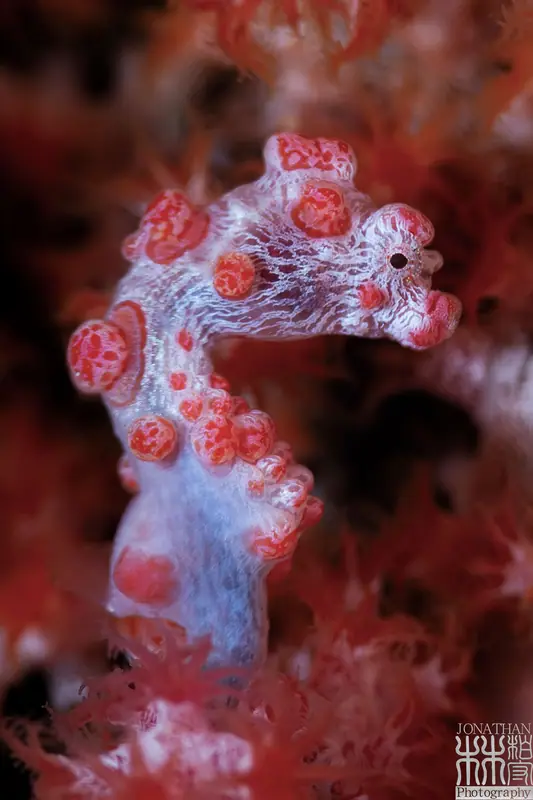
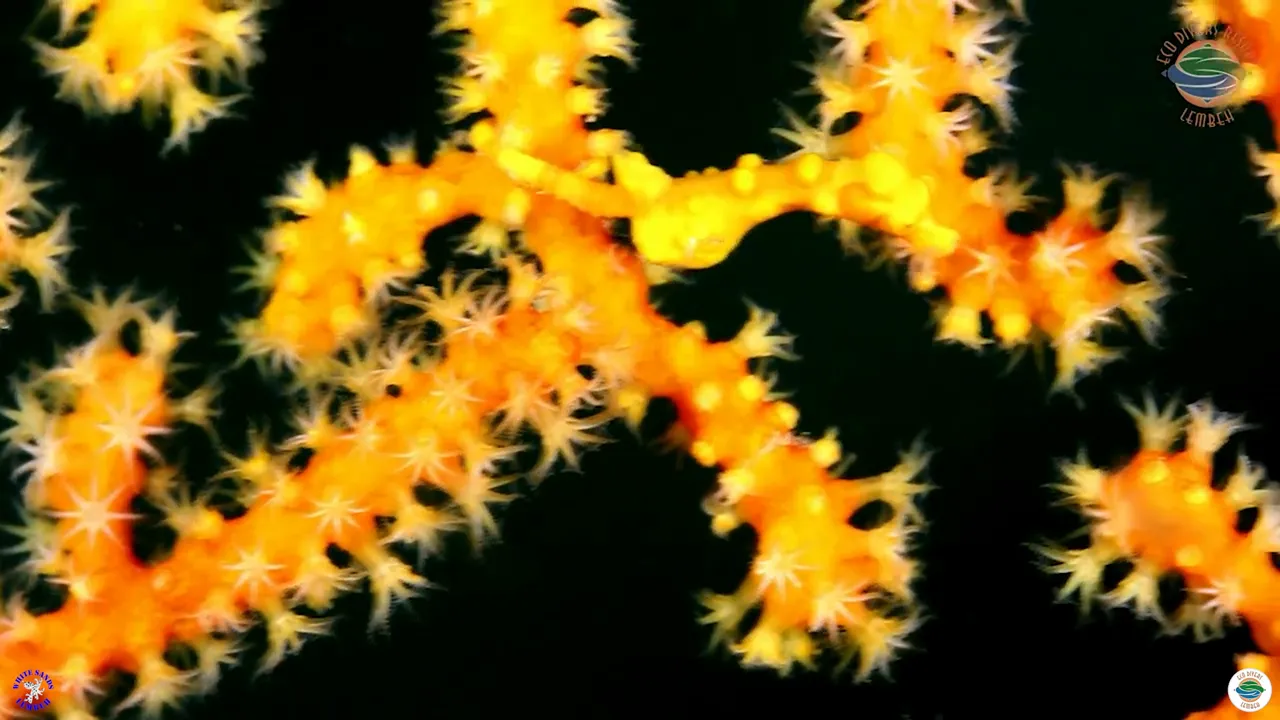
Pygmy seahorse on red soft coral Juvenile boxfish, yellow with black spots Nudibranch with white-tipped horns Yellow seahorse holding a twig
Pygmy seahorse on red soft coral · Photo: Jonathan Lin
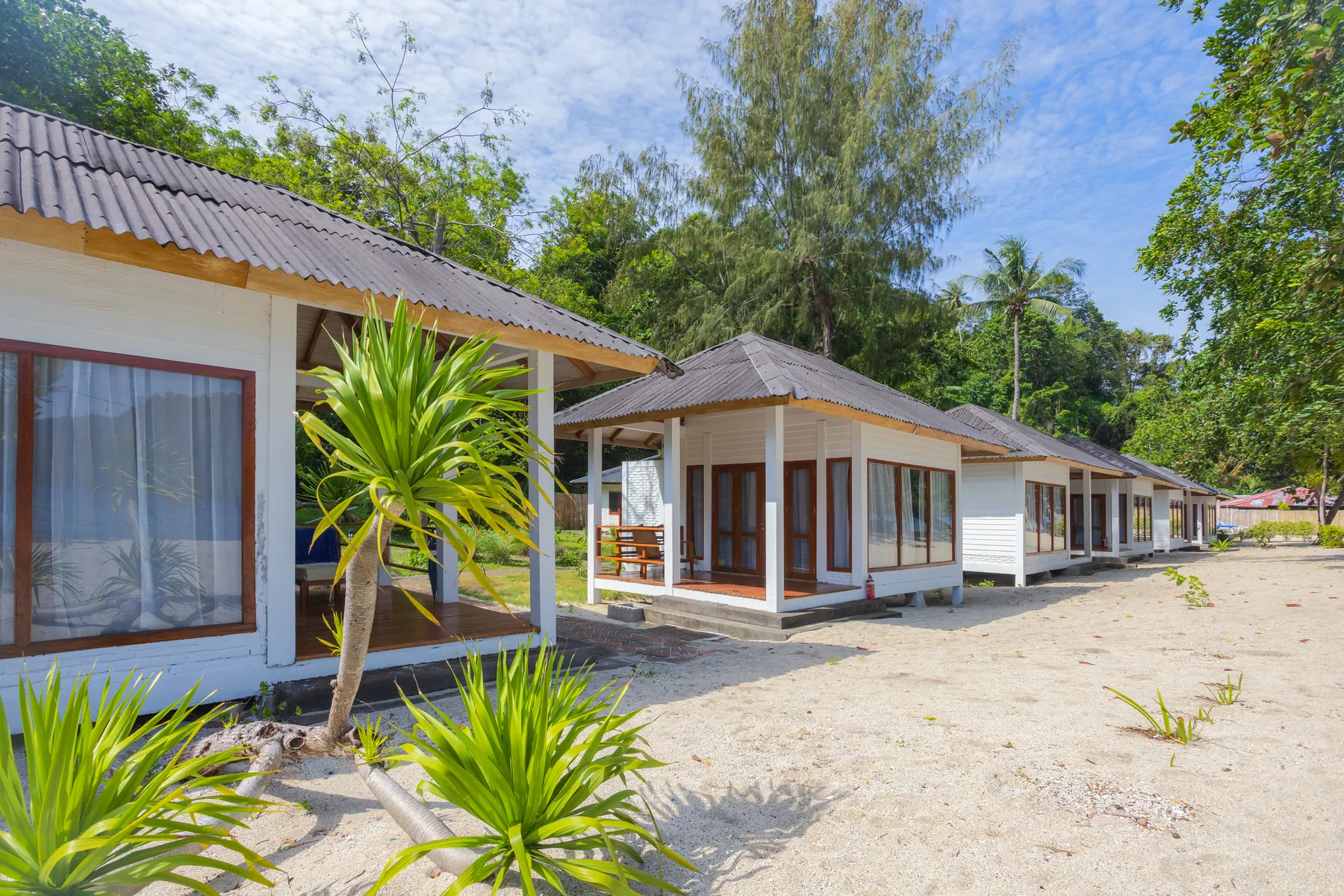
12air-conditioned oceanfront cottages
5 STARPADI dive resort, with courses on site from beginner to pro
100%sustainable seafood, advised by Conservation International

05 m · Surface interval

Built for people who dive all day

Between dives you want a cold shower, a real meal and a bed. Every cottage has air conditioning and an ensuite bathroom, set a few metres from the beach.

There is a pool, a restaurant and bar, an Indonesian spa for tired shoulders and a front desk that is staffed around the clock. Rooms are available as single, twin, double or triple.

Chefs cook Indonesian and international dishes from fish bought at the market each morning. We use only sustainable species, on advice from Conservation International.
12 m · Muck diving

Small, strange and very close

Eco Divers Lembeh

Eco Divers is the dive centre at White Sands. Lembeh Strait is one of the best places on Earth to look closely at weird animals. You will spend an hour on one patch of sand with a guide who knows where each creature lives.
What you might meet

  • Hairy frogfishLooks like a clump of weed until it lunges.
  • Pygmy seahorseA couple of centimetres long, hiding on coral.
  • OctopusHides in shells and rubble, and some carry a shell for cover.
  • Tiny squidSmall enough to sit on a fingertip, and glittering.
  • NudibranchsDozens of species, in every colour you can imagine.
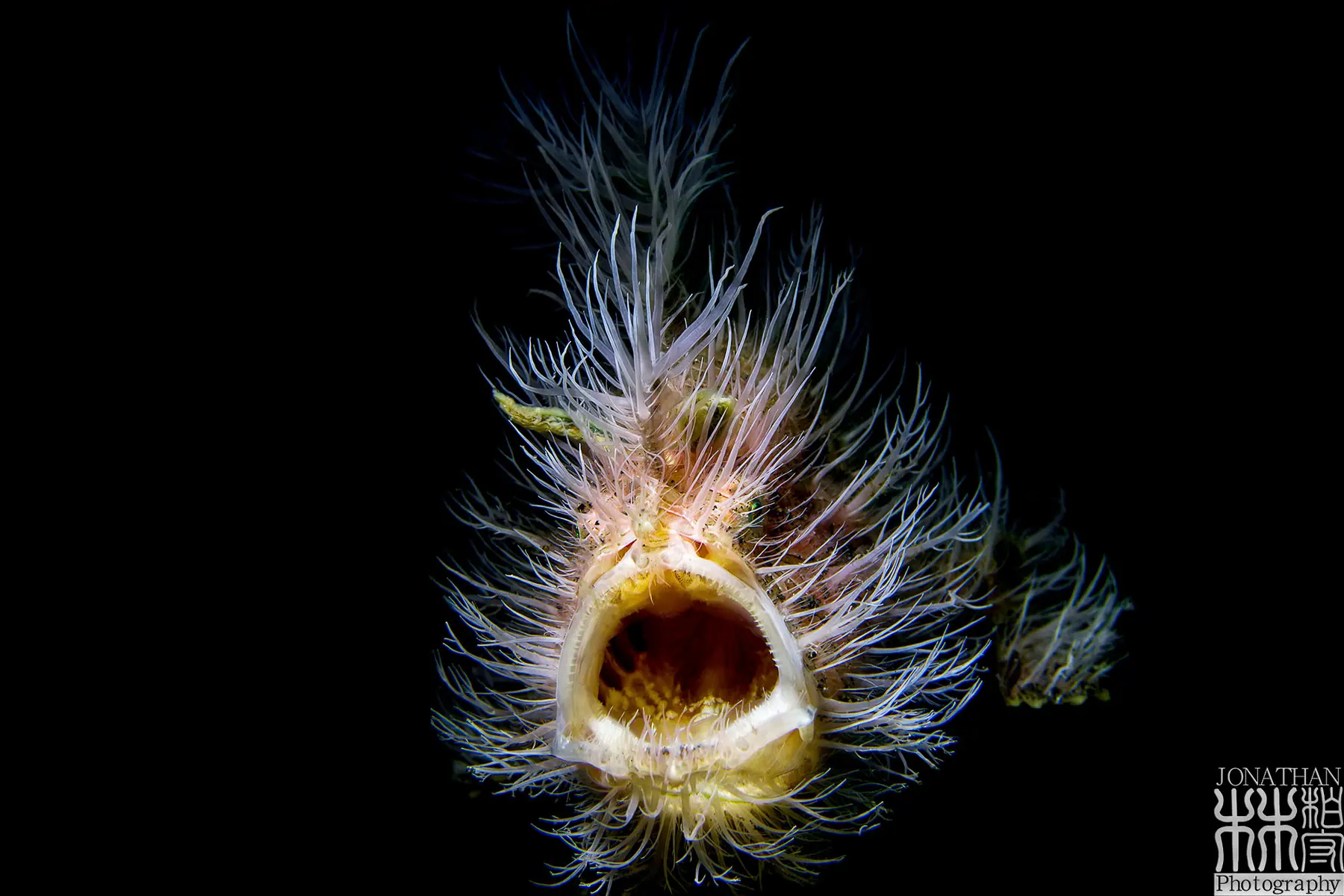
Photo: Jonathan Lin

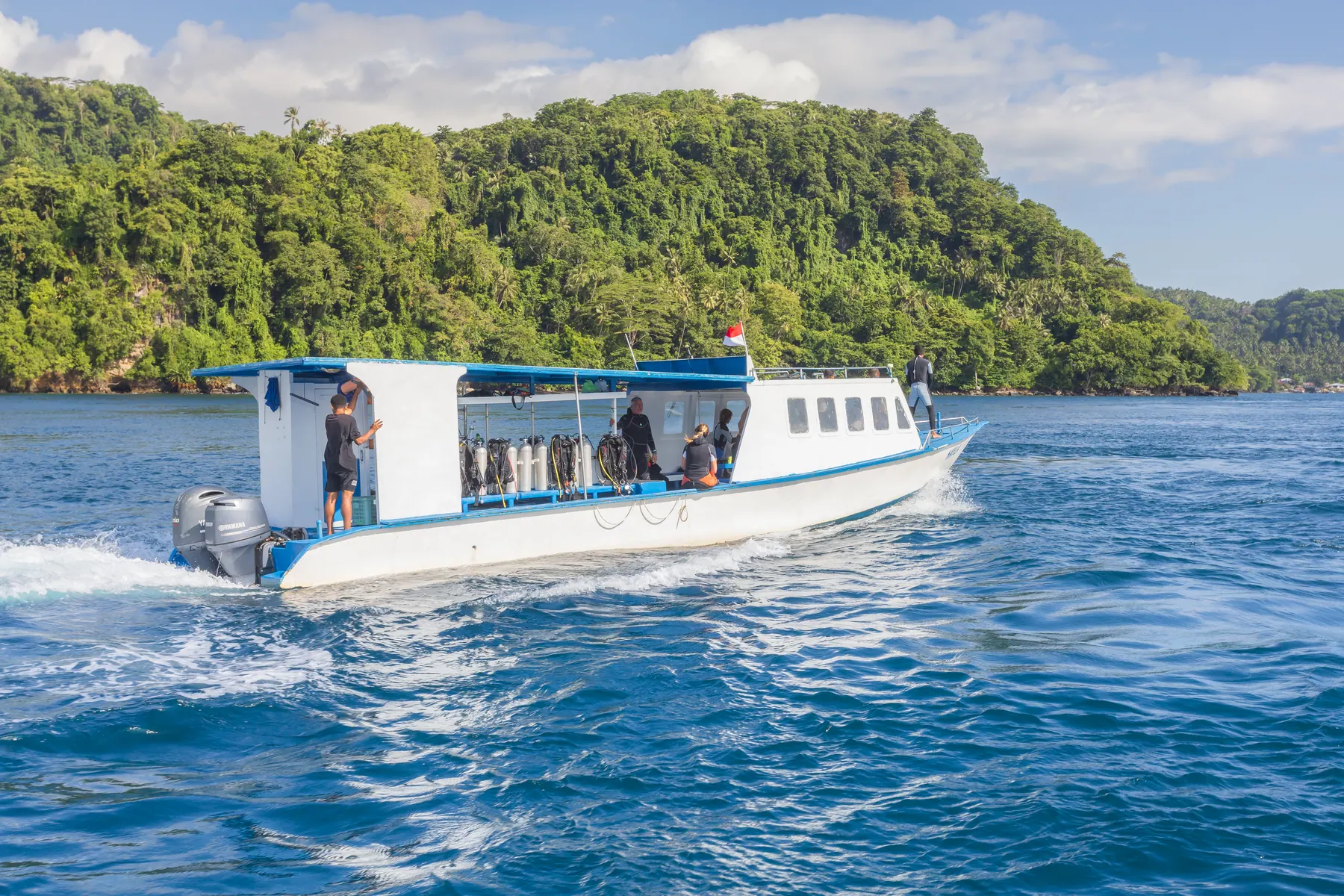
The dive centre

Boats, a camera room with rinse tanks, and a compressor house that fills your tanks, all a short walk from your cottage.
20 m · Learn here

Certify. Specialise. Go deeper.

Eco Divers is a PADI 5 Star Dive Resort. PADI is the world's largest scuba training organisation, and its courses are known for their safety and standards.

Discover Scuba DivingNever dived? Try it first

Experience diving under the watch of a PADI instructor, with no certification needed. You usually spend a morning in the pool or in shallow water learning the basic skills and getting comfortable, then make a fun dive with your instructor on one of the reefs.

  • Minimum age10 years
  • DurationHalf a day
  • Dives1 or 2
  • Maximum depth12 m

Ask about this course

Scuba DiverA quick first certification

A pre-entry level certification for holidaymakers and anyone who only plans to dive a couple of times a year. It can be done in as little as two days. You can then dive under the direct supervision of a PADI Divemaster, Assistant Instructor or Instructor on your next trip.

  • Minimum age10 years
  • Duration2 days
  • Dives2
  • Maximum depth12 m

Ask about this course

Open Water DiverThe first full certification

The first course that makes you a certified diver, and the starting point for all further PADI training. The card is recognised at dive centres around the world, and the Sulawesi Sea is your classroom.

You can do the theory online before you arrive (PADI eLearning), so more of your holiday is spent in the water.

  • Minimum age10 years
  • Duration3 to 4 days
  • Dives4
  • Maximum depth18 m (12 m if under 15)

Ask about this course Start online with PADI eLearning →

Advanced Open Water DiverAfter Open Water

A two-day course built around five supervised dives in different kinds of diving, such as deep and navigation dives. It builds your experience and confidence in a structured way. The theory can be done online first with PADI eLearning.

  • Minimum age12 years
  • Duration2 days
  • Dives5
  • Maximum depth30 m (18 m if under 15)

Ask about this course Start online with PADI eLearning →

Enriched Air (Nitrox) DiverPADI's most popular specialty

Breathing air with more oxygen and less nitrogen gives you more no-decompression time, especially on repeat dives. You learn how it works and what to consider with your equipment. The theory can be done online first with PADI eLearning.

  • Minimum age12 years
  • Duration1 day

Ask about this course Start online with PADI eLearning →

Specialty coursesNight, deep and more

Specialty courses are a safe, supervised introduction to a particular kind of diving, with the techniques, planning and safety skills that go with it. Night diving and deep diving are two examples. Ask which ones suit the diving you want to do in Lembeh.

Ask about this course

Emergency First ResponseDivers and non-divers

CPR and first aid skills to help in a life-threatening emergency. You do not need to be a diver to take it.

  • Duration1 day

Ask about this course

Rescue DiverA big step up in skills

Many divers say this is the most rewarding course. You learn to prevent and manage problems underwater and at the surface, from a tired or panicked diver to an unconscious one, and practise first aid and emergency management. It includes classroom, confined water and beach sessions, then five open water sessions. The theory can be done online first with PADI eLearning.

  • Minimum age12 years
  • Duration2 to 4 days
  • Dives4

Ask about this course Start online with PADI eLearning →

Master Scuba DiverThe top recreational rating

The highest level in recreational diving. To reach it you complete Rescue Diver, Emergency First Response and five specialty courses.

  • Minimum age12 years

Ask about this course

DivemasterYour first professional level

Academic study, a rescue evaluation, underwater mapping, and practice in dive planning and leadership. You also work as an instructional assistant in confined and open water. Finishing it qualifies you to attend a PADI Instructor Development Course and become a PADI Open Water Scuba Instructor.

  • Minimum age18 years

Ask about this course Start online with PADI eLearning →

PADI course

Discover Scuba Diving

  • Minimum age10 years
  • DurationHalf a day
  • Dives1 or 2
  • Maximum depth12 m

Who is it for?

Anyone who has wondered what it is like to breathe underwater. It is not a certification course: it is a quick, easy introduction to scuba. You need to be at least 10 years old and in reasonable physical health. No diving experience is needed.

What will you do?

  • Look at the scuba equipment and see how easy it is to move around in it
  • Find out what it feels like to breathe underwater
  • Learn the key skills used on every dive
  • Swim around and explore with your instructor

Before an open water dive you practise a few more skills in shallow water. Afterwards your instructor can explain how to become a certified diver with the Open Water Diver course.

How can you start?

Contact us to sign up. We can send you the Discover Scuba Diving participant guide, which explains the experience and lets you read through the safety rules and skills beforehand.

What gear will you use?

Your instructor normally provides all the basic gear: mask, snorkel, fins, regulator, buoyancy control device, gauges and a tank. Ask us if you want to know more about gear.

Ask about this course

PADI course

Scuba Diver

  • Minimum age10 years
  • Duration2 days
  • Dives2
  • Maximum depth12 m

Who is it for?

People who are short on time but want to become divers, especially if you expect to dive mostly with a guide. It is the first part of the Open Water Diver course, so it can also be a stepping stone to full certification. You need to be at least 10 years old, a reasonable swimmer and in good health. No experience is needed, but you can try Discover Scuba Diving first.

What can you do afterwards?

  • Dive down to 12 metres (40 feet) under the direct supervision of a PADI professional
  • Get tank fills, rent or buy scuba gear and join dive activities, as long as you are properly supervised
  • Carry on to the Open Water Diver certification and take certain specialty courses

What will you learn?

The course has three parts, each one a shorter version of the matching part of the Open Water Diver course: knowledge development (the first three of five sections), confined water dives to learn basic skills (the first three of five dives) and open water dives to use them (two of the four dives).

How can you start?

You can start with the online theory (PADI eLearning for Open Water Diver). You only need the first three sections, and you have a year to finish the rest if you decide to go on to full certification. Contact us to arrange it.

What gear will you use?

Basic scuba gear: mask, snorkel, fins, regulator, buoyancy control device and a tank. Your instructor will explain anything else you need, such as a logbook.

Ask about this course

PADI course

Open Water Diver

  • Minimum age10 years
  • Duration3 to 4 days
  • Dives4
  • Maximum depth18 m (12 m if under 15)

Who is it for?

Anyone who has always wanted to learn to dive. It is the world's most popular scuba course, and the card is recognised almost everywhere. You need to be at least 10 years old, a reasonable swimmer and in good health. No experience is needed.

What will you learn?

The course has three parts:

  • Knowledge development: the basic principles of scuba diving, online, by independent study or in a classroom
  • Confined water dives: the basic scuba skills
  • Open water dives: using your skills and exploring

Short on time? The Scuba Diver course may suit you better.

How can you start?

Sign up for PADI eLearning and you can start learning right away, at your own pace. Then do your dives with us. You can also study with PADI's home-study materials (a tablet app, or a manual and video). Contact us if you would like help planning it.

What gear will you use?

Basic scuba gear: mask, snorkel, fins, regulator, buoyancy control device and a tank. Your instructor will tell you about everything you need.

Ask about this course Start online with PADI eLearning →

PADI course

Advanced Open Water Diver

  • Minimum age12 years
  • Duration2 days
  • Dives5
  • Maximum depth30 m (18 m if under 15)

Who is it for?

Open Water divers aged 12 or over who want to build on their skills. You do not need to be "advanced" to take it: the course is designed to advance your diving, so you can start right after Open Water. Younger divers can only do some of the dives, so check with your instructor.

What will you learn?

You plan your learning with your instructor from a long list of Adventure Dives. Two are required, Deep and Underwater Navigation, and you choose three more, for five dives in total. Photography, buoyancy control, fish identification and wreck diving are some of the options. Each Adventure Dive may count towards the first dive of the matching specialty course. If you are already an Adventure Diver, you only need two more Adventure Dives.

How can you start?

PADI eLearning lets you learn about seven of the most popular Adventure Dives first (Deep, Underwater Navigation, Boat, Night, Peak Performance Buoyancy, Underwater Naturalist and Wreck), at your own pace. Your instructor tells you what else to study.

What gear will you use?

As well as basic gear you need a compass and a dive knife or dive tool. Depending on the dives you choose, your instructor may suggest extras such as a dive light for night diving.

Ask about this course Start online with PADI eLearning →

PADI course

Enriched Air (Nitrox) Diver

  • Minimum age12 years
  • Duration1 day

Who is it for?

Anyone who would like to stay down longer and get back in the water sooner. Nitrox gives you more no-decompression time, especially on repeat dives. You need to be an Open Water Diver aged at least 12 (in some regions the minimum age is higher).

What will you learn?

Why air with more oxygen and less nitrogen gives you more bottom time, and what it means for your equipment. In a practical session, and on two dives (optional or required), you:

  • Discuss how to manage your oxygen exposure
  • Practise analysing the oxygen content of your tank
  • Set your dive computer for nitrox

How can you start?

PADI eLearning covers all the course content, at your own pace, with an online manual. You can also read the manual and watch the video instead. Contact us to enrol.

What gear will you use?

Most modern scuba gear and dive computers can be used with nitrox, and your instructor will check yours. Tanks must meet oxygen-service standards and be used only for nitrox. You practise with oxygen analysers and cylinder decals.

Ask about this course Start online with PADI eLearning →

PADI course

Emergency First Response

  • Duration1 day

Who is it for?

Anyone, diver or not. Emergency First Response (EFR) builds your confidence and your willingness to help when someone has a medical emergency, with simple steps that you practise in a relaxed setting. It meets the CPR and first aid requirement for the Rescue Diver course and all professional ratings.

What can you learn?

The EFR programme includes these courses. Ask us which ones you need.

  • Primary Care (CPR): the steps for life-threatening emergencies, such as someone who is not breathing or has serious bleeding
  • Secondary Care (First Aid): easing pain and reducing the risk of further harm, including bandaging and splinting
  • Care for Children: emergency care for infants and children
  • CPR and AED: CPR and how to use an automated external defibrillator
  • First Aid at Work: for places where the law asks for enhanced training
  • EFR Refresher: a good idea every 24 months

Ask about this course

PADI course

Rescue Diver

  • Minimum age12 years
  • Duration2 to 4 days
  • Dives4

Who is it for?

Divers who want to be more confident and better buddies. Many call it the most challenging and the most rewarding course they have taken, and it is still fun. You need to be an Advanced Open Water Diver aged at least 12 who has done the Underwater Navigation Adventure Dive, with Emergency First Response (CPR and first aid) training from the past 24 months. You can do that training during the course.

What will you learn?

Through knowledge development and rescue exercises you learn what to look for and how to respond. Rescue scenarios let you put it into practice. Topics include:

  • Self rescue
  • Recognising and managing stress in other divers
  • Emergency management and equipment
  • Rescuing panicked divers
  • Rescuing unresponsive divers

How can you start?

PADI eLearning takes you through five knowledge sections at your own pace, with an online manual to use during and after the course. Contact us to enrol.

What gear will you use?

Your basic scuba gear, plus a pocket mask for practising in-water resuscitation. During exercises you work with an oxygen unit, floats, marker buoys and perhaps CPR mannequins. Your instructor may suggest a first aid kit of your own.

Ask about this course Start online with PADI eLearning →

PADI course

Master Scuba Diver

  • Minimum age12 years

Who should consider it?

Every diver aged 12 or over can aim for it. Fewer than two percent of divers reach this rating, and it shows you have dived in many different conditions and built real experience.

What does it take?

  • PADI Open Water Diver
  • PADI Advanced Open Water Diver
  • PADI Rescue Diver (with Emergency First Response)
  • Five PADI Specialty Diver certifications
  • At least 50 logged dives

Qualifying certifications from other diver training organisations may count. Ask us about the best way to get there from where you are now.

Ask about this course

PADI course

Divemaster

  • Minimum age18 years

Who is it for?

People who love diving and want to do what they love as a career. It is your first level of professional training. Working closely with an instructor you sharpen your dive skills and rescue skills and learn to supervise dive activities and assist with training.

You need to be a PADI Rescue Diver (or hold a qualifying certification), at least 18 years old, with Emergency First Response (CPR and first aid) training from the past 24 months and a medical statement signed by a physician in the past 12 months. You also need at least 40 logged dives to begin the course and 60 to earn the certification. Certifications from other organisations may qualify, so ask us.

What will you learn?

Through knowledge sessions, waterskills exercises, workshops and hands-on practical assessment you learn to organise and lead dive activities. Topics include:

  • The role of a Divemaster, and supervising dive activities
  • Diver safety and risk management
  • Dive setup, briefings and managing a dive
  • Mapping an open water site
  • Organising a search and recovery project and a deep dive
  • Conducting a scuba review and a skin diver course
  • Assisting with Discover Scuba Diving
  • The business of diving, and your career

How can you start?

PADI eLearning for Divemaster takes you through eight knowledge sections at your own pace, with an online manual. Taking Dive Theory Online as well can give you credit for half of the Divemaster final exam. Contact us to enrol.

What gear will you use?

All your basic scuba gear, plus a dive computer, a dive knife and at least two surface signalling devices. For exercises such as mapping and search and recovery you also use a compass, floats, marker buoys, lift bags and slates.

Ask about this course Start online with PADI eLearning →

24 m · Rates

Work out your trip

Loading rates…

28 m · Two locations

Same team. Bigger blue.

As well as Lembeh, we run Dive Into Raja Ampat in West Papua: reefs, walls and big fish to go with Lembeh's macro life. Many divers combine the two on one trip, and we can plan both together. Please contact us for more details.
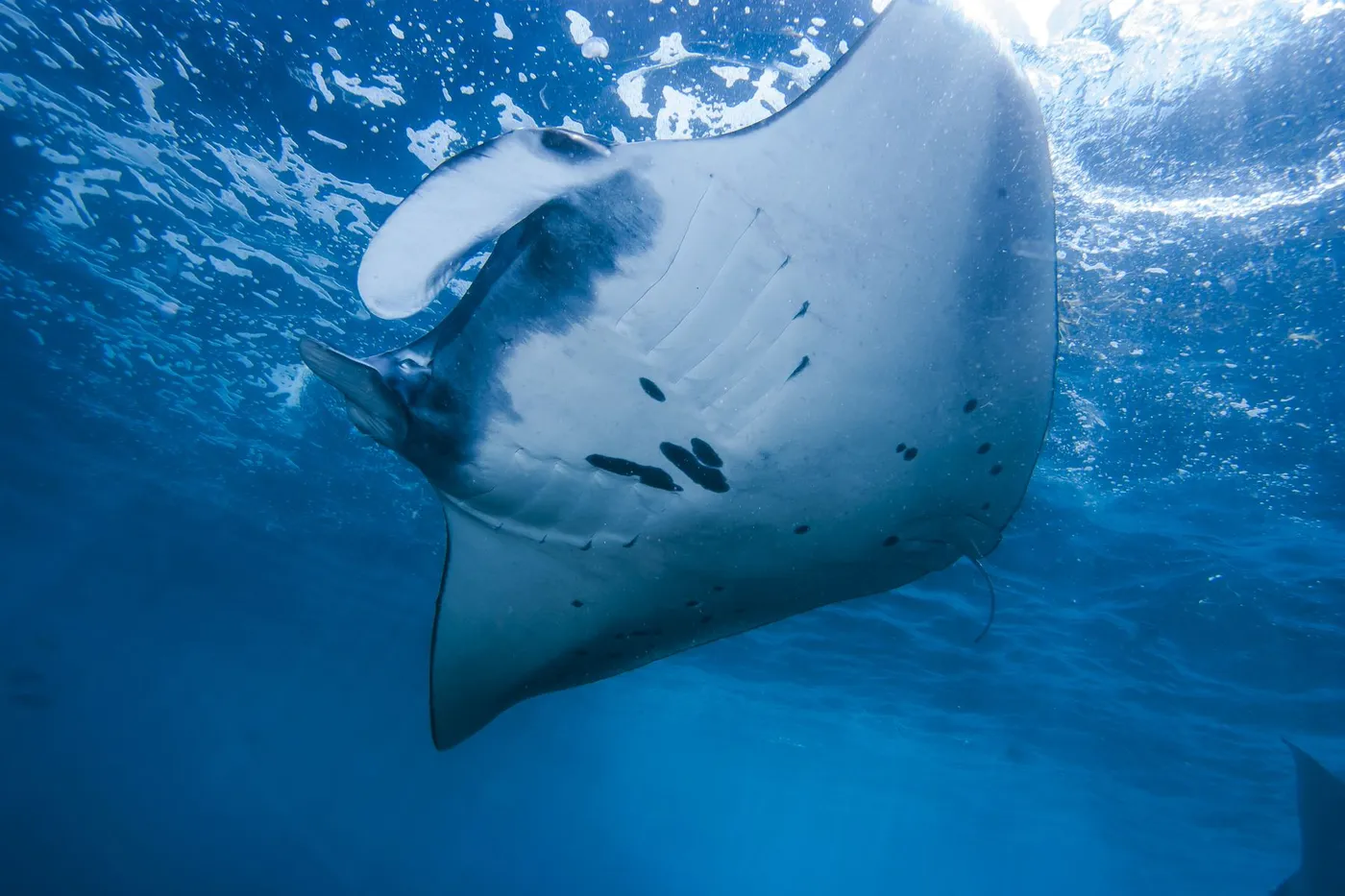
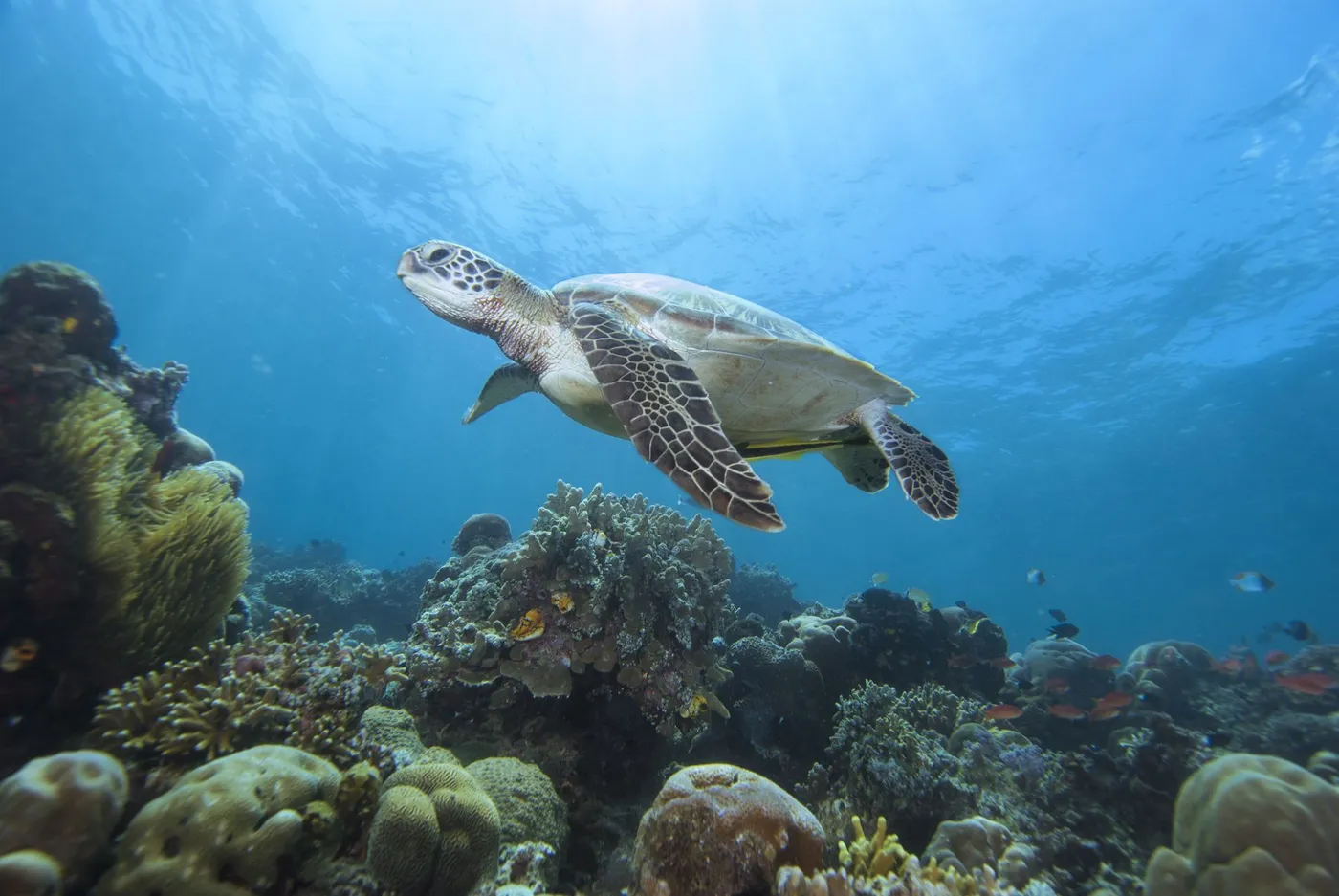
A reef manta ray gliding over the reefA green turtle over the coralSoft coral and schooling anthias in the sunThe resort jetty and white-sand beach from the air

Photos from Dive Into Raja Ampat

29 m · Before you travel

Questions divers ask

How do I get to Lembeh?

Fly to Manado (Sam Ratulangi airport) in North Sulawesi. For most divers from Europe, North America and Asia the easiest route is via Singapore, which is about 3 hours 20 minutes from Manado. You can also fly via Jakarta or Bali with Garuda Indonesia, Lion Air and other airlines.

Flights fill up in high season and groups can face extra charges, so book early. Tell us your arrival details when you enquire and we will help you plan the rest.

Do I need a visa for Indonesia?

Most visitors do. Many nationalities can apply online for a visitor e-visa before they travel, at the official site evisa.imigrasi.go.id. Your passport must be valid for at least six months from the day you arrive, and every traveller, including children, needs their own visa.

Rules and fees change, so always check the official site or your nearest Indonesian embassy before you travel.

When is the best time to visit?

You can dive Lembeh all year round. The sunniest months are April to October, but rain can come at any time, and it is warm rain.

What exposure protection do I need?

Not much. A 3 mm or 5 mm one-piece suit is plenty, or a dive skin if you do not get cold easily. Choose full arms and legs to protect you from stinging hydroids.

What should I wear and pack for on land?

Shorts and a T-shirt by day, even when it rains. In the evenings the dress code is casual, so light trousers or jeans and a shirt are plenty. You will not need a sweatshirt.

How do I pay?

In Indonesian rupiah (IDR) in cash, or by Visa or Mastercard, converted at the day's Bank Indonesia rate. We also accept US dollars and euros in cash, converted at the same rate. You can draw rupiah from ATMs at local banks.

What plugs and voltage are used?

Indonesia uses 220 to 240 V at 50 Hz. Our sockets take European two-pin plugs (Type C and Type F), and most other two-pin plugs fit too. Power cuts can happen in Indonesia, but we have a generator backup.

What else is there to do besides diving?

North Sulawesi has plenty of beautiful scenery. You can go white-water rafting, visit waterfalls or a craft centre, trek in the rainforest, see the paddy fields at Lake Tondano, or wander through the markets. We can arrange excursions that start from White Sands Lembeh. Just ask our reservations team.

Do I need malaria tablets? What about medical care?

North Sulawesi is officially non-malarial, but Lembeh is tropical, so follow your own doctor's advice about tablets, and use mosquito repellent on your arms and legs in the evening. Occasional cases of dengue fever are reported, mostly in villages.

There are chemists and dentists locally, and Manado, the regional capital, has a working recompression chamber.

What is Lembeh like?

Lembeh is an off-the-beaten-track dive destination, not a mainstream tourist resort, and that is part of its appeal. Facilities and service can be simple, but the people are friendly and helpful. There is little shopping and nobody pressing souvenirs on you, and you will not find crowds of tourists.

Another question? Ask us, we reply quickly on WhatsApp.

30 m · Contact

Tell us when you want to dive

Check room availability

Choose your dates to see rooms and prices. The booking page opens in a new tab on our booking partner's secure site.

Or send us an enquiry

The quickest way to reach the team is WhatsApp. Send your dates, how many divers, and whether you want to learn or just dive.

WhatsApp / calls / SMS

Email

White Sands Lembeh, Batukota, Lembeh Island, North Sulawesi, Indonesia

This sends an enquiry. We will confirm availability and prices by email or WhatsApp.